

DEEP Discovery opens up new opportunities to bring marine research into the classroom
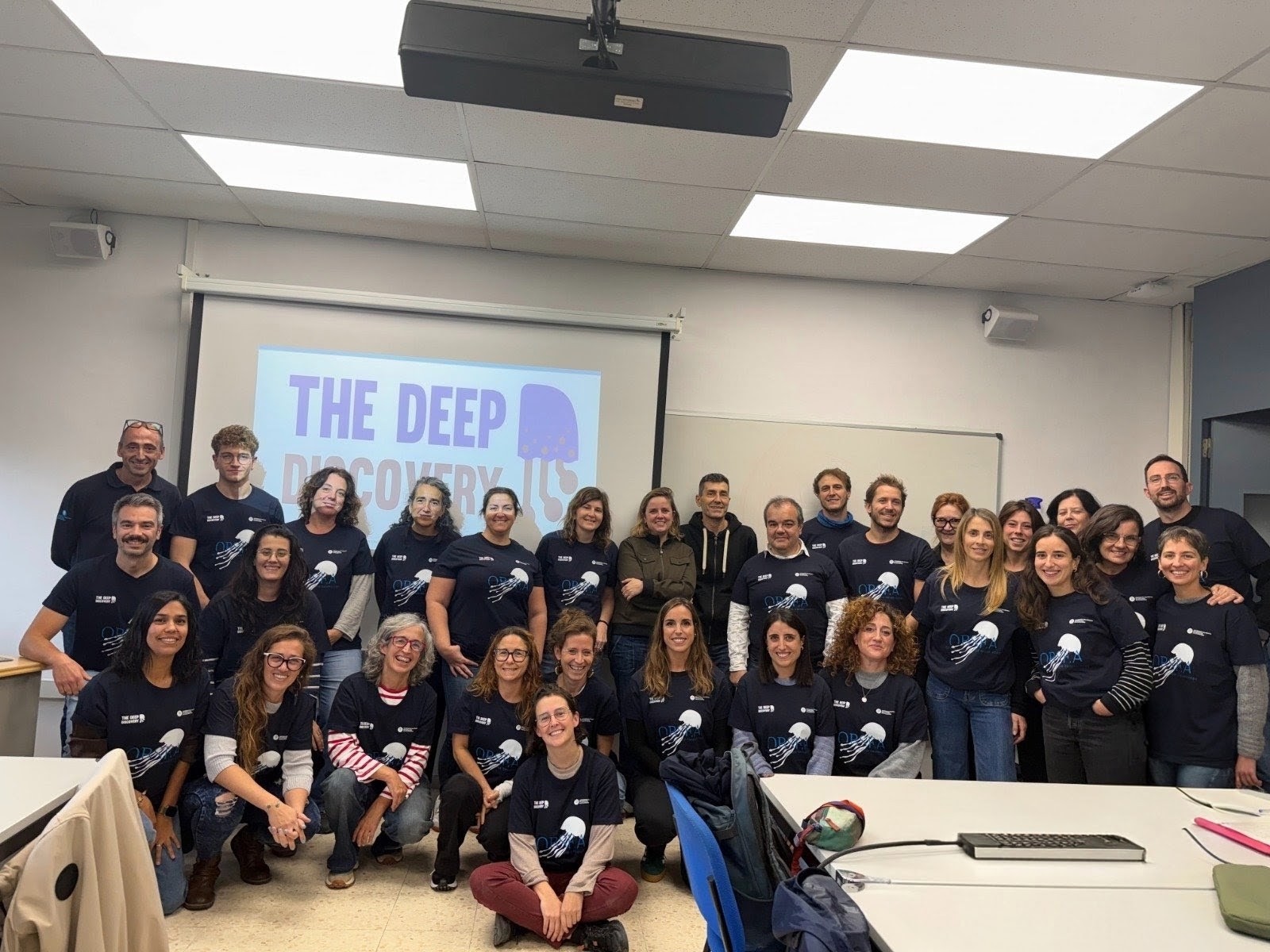
The event, held on 3 November at EPSEVG, provided an opportunity to share educational experiences, explore the resources developed within the European DEEP Discovery project, and discuss their integration into school curricula.
On 3 November, the Escola Politècnica Superior d'Enginyeria de Vilanova i la Geltrú (EPSEVG) hosted the workshop "DEEP Discovery in Schools: From Pilot Activities to Curriculum Integration", organised by the SARTI research group at the Universitat Politècnica de Catalunya (UPC).
The event brought together teachers from different educational levels and environmental education professionals to share experiences and explore how the resources developed within the European DEEP Discovery project can help bring marine research closer to students.
From scientific research to classroom experience
One of the main themes of the event was demonstrating how real scientific data can be transformed into learning resources. Through the DEEP Discovery educational platform and the BIIGLE PARTY citizen science tool, participants had the opportunity to explore activities involving the identification of marine organisms using underwater images collected during scientific research campaigns.
This approach allows students not only to learn about marine ecosystems but also to gain insight into scientific methods and participate in activities connected to real research.
The experiences shared by Institut Joaquim Mir, col·legi Sant Bonaventura and Escola Arjau provided practical examples of how these resources can be adapted to different age groups, subjects and teaching approaches. Their contributions illustrated the range of opportunities offered by the project, both for addressing curriculum content and for encouraging observation, critical thinking and environmental awareness.
The event also featured the participation of the Xarxa Catalana d'Escoles Blaves (Catalan Blue Schools Network), which presented its initiative to promote ocean literacy and strengthen connections between educational institutions and the marine environment.
New ideas for bringing DEEP Discovery into the classroom
The final part of the event provided an opportunity to discuss how DEEP Discovery resources could be incorporated into regular teaching activities.
Among the ideas proposed were using BIIGLE PARTY to identify and compare marine species, developing interdisciplinary projects on biodiversity and marine ecosystems, and working with real scientific data to introduce students to research processes.
Participants also identified areas where additional support could facilitate classroom implementation, including adapting content to different educational levels and providing complementary teaching materials.
Feedback from the event was positive, and several teachers expressed their interest in starting to use the resources during the current academic year.
Beyond the pilot activities
The event provided an opportunity to reflect on lessons learned from the pilot activities and gather new perspectives on the use of the educational materials. It also encouraged exchanges between the research team, schools and environmental education professionals, creating opportunities for future collaboration.
These discussions will help inform the next steps of DEEP Discovery, particularly in adapting the resources to teachers' needs and supporting their use in different educational settings.
Through initiatives such as this, the SARTI research group at UPC continues to promote closer connections between marine research and the educational community, encouraging students to engage with science and develop a better understanding of the oceans.
More information:
