

Deployment of landers for monitoring protected areas on the Costa Brava
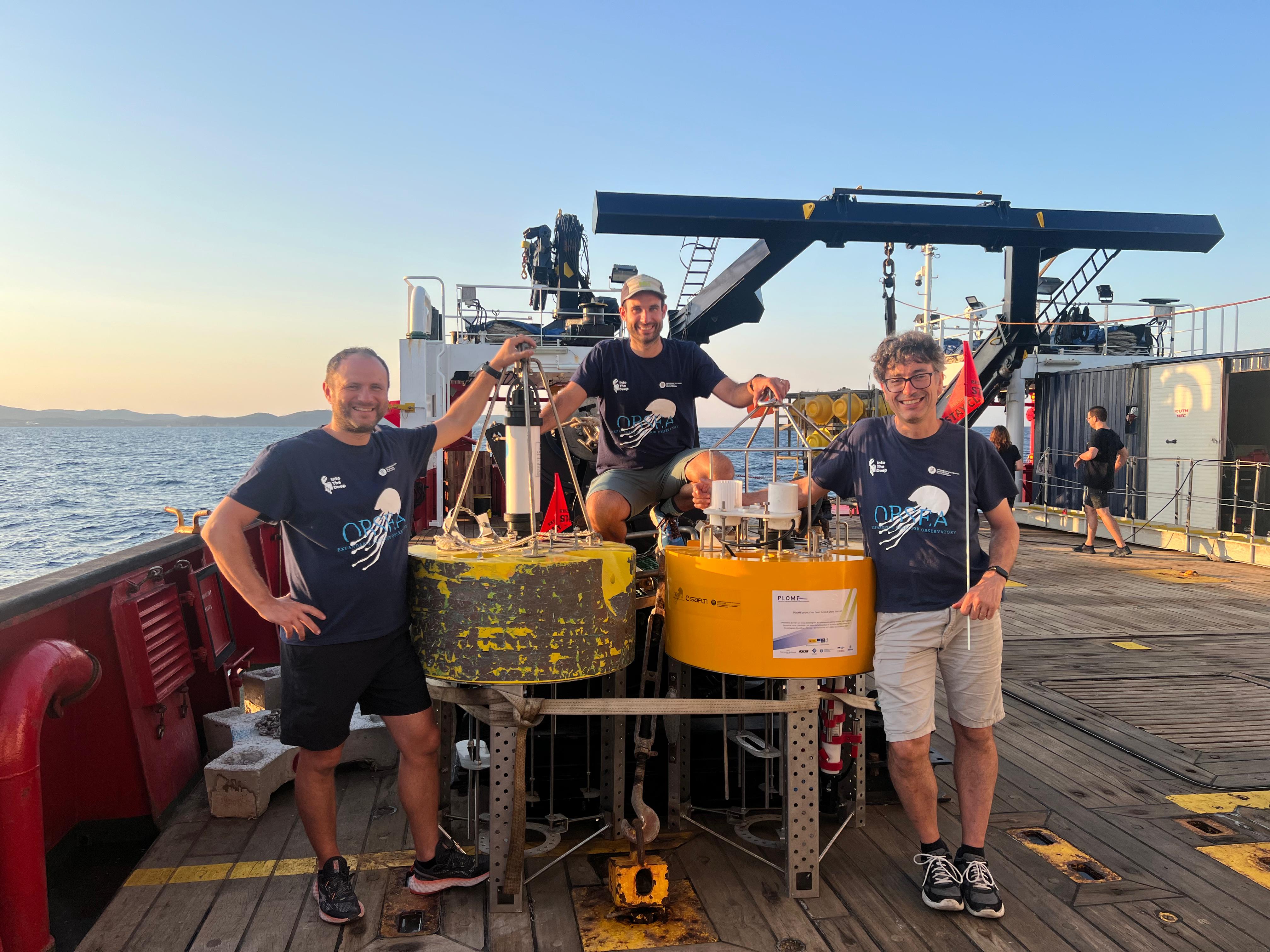

This week marks the start of a campaign to monitor the seafloor using robotic platforms and state-of-the-art sensors. The goal is to collect high-resolution environmental and biological data to improve understanding of marine ecosystems, particularly in areas impacted by fishing activity or undergoing environmental restoration.
The campaign, taking place in two marine protected areas along the Catalan coast—Palamós and Tossa de Mar—involves instruments such as landers equipped with underwater cameras and various sensors capable of measuring multiple marine parameters and transmitting this information to the surface. These devices can remain submerged for up to six months at depths of up to five hundred metres, allowing for continuous monitoring of local biodiversity.
The work is being carried out aboard the oceanographic vessel Sarmiento de Gamboa, from which deployment and recovery operations for the robotic platforms are coordinated.
Through automated processing of images captured by these platforms, researchers can assess species abundance and overall biodiversity in the studied ecosystems. The main goal is to obtain data that certifies the health status of these marine protected areas and to analyse how factors such as rising water temperatures or overfishing may affect the species living there.
These technologies are crucial for providing the scientific knowledge needed to evaluate the effectiveness of marine protection policies aimed at recovering and conserving these valuable ecosystems.
This deployment is part of the PLOME project (Observation Platform for Marine Ecosystem Monitoring), led by the Institut de Ciències del Mar (ICM-CSIC), with additional partners including the University of Girona, the University of the Balearic Islands, the Universidad Politécnica de Madrid, and IQUA ROBOTICS. Together, they are working to advance research and conservation of Mediterranean marine ecosystems through cutting-edge technology.
