

OBSEA-UPC participates SILENCIO project
Establishing the bases for a more sustainable development of fishing and shellfish activity with less acoustic impact is the fundamental objective of the SILENCIO project, an initiative launched by the Centro Tecnológico del Mar-Fundación Cetmar, located in the town of Vigo (Galicia ), dependent on the Consellería do Mar de la Xunta de Galicia, which aims to contribute to the good environmental status of the marine environment.
It is planned in its development to evaluate the feasibility of incorporating electric propulsion in small fishing vessels, which will work to reduce the carbon footprint of the small sector and the noise pollution they generate. All these actions are carried out hand in hand with the fishing sector, accompanying and empowering them to strengthen their commitment to the problem and to be an active part of the solution, working for an environmentally sustainable, socially responsible and economically viable sector, in line with the guidelines of the European Fund. Maritime and Fishing, in which the Biodiversity Foundation (Ministry for the Ecological Transition and the Demographic Challenge) collaborates, through the Pleamar Program.
The project will also expand existing knowledge on marine noise by identifying the main sources of marine noise in the Galician Rías Baixas, both that produced by the activities that humans carry out at sea and that of natural origin. This work is possible thanks to the participation of the CETMAR Foundation in the RAIA Transboundary Oceanographic Observatory (Galicia-North of Portugal).
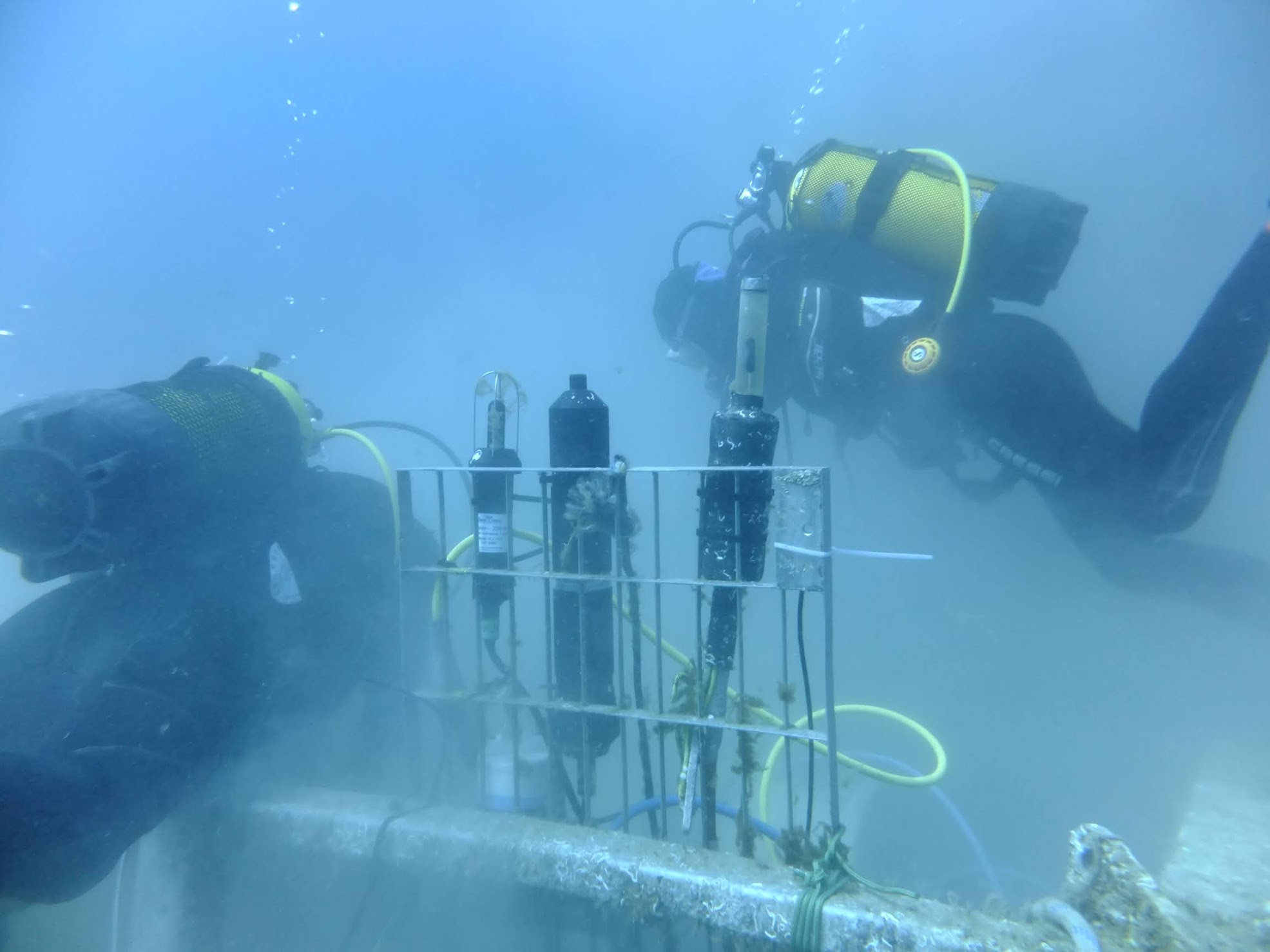
Within this initiative, the transfer of results achieved to other marine observatories is of special importance, especially to the OBSEA Wired Underwater Observatory belonging to the Polytechnic University of Catalonia and operated by the SARTI research group, which actively participates in the project with the placement of the last July of a hydrophone in its facilities, twin to the one located in Galicia. Both hydrophones are configured in the same way to facilitate the comparison of the records and their treatment, giving special importance to the identification of fishing activities and the passage of cetaceans.
Over several months, the SILENCIO hydrophone will record the underwater noise in the Vilanova i la Geltrú area, as will the OBSEA's own hydrophone, and both records will be subject to the automatic noise source detection algorithm developed by the Multimedia Technology Group of the University of Vigo for the Galician registry, in order to evaluate the transferability of this tool to other registries. Thanks to this tool, noises from boats and marine cetaceans could be automatically identified and will be shown in a viewer developed within the initiative that will be presented in the coming months by SILENCIO in a telematic event for the dissemination of results.
This project has also served as an impetus to reinforce the collaboration of CETMAR and the OBSEA Observatory, consolidating itself in the request for new initiatives that we hope will extend the objectives of SILENCIO in space and time.